Energy-efficient home improvement credit rules for 2025 give homeowners a real shot at big, IRS-approved tax savings on upgrades, but most miss out because they underestimate paperwork, don’t understand the new limits, or mix up labor and material reporting. If you’ve always put this off, you need a practical guide that shows you, line by line, how to avoid IRS mistakes and actually get your tax credit paid, not denied.
Key Takeaways
- Claim up to 30% back on qualified home upgrades in 2025, with yearly caps ($1,200 for most, $2,000 for heat pump HVAC, and some water heaters).
- Documentation is non-negotiable: you must save manufacturer QMID, Energy Star/IECC certifications, contractor invoices, and prove the in-service date.
- Misunderstanding per-item caps, labor eligibility, or missing paperwork are the main reasons for IRS rejections. Follow the checklist to avoid losing your credit.
- Quick summary – what the Energy Efficient Home Improvement Credit covers in 2025
- Which specific upgrades qualify – a complete itemized list and their limits
- Advanced analysis & common pitfalls
- Conclusion
- FAQ
Quick summary – what the Energy Efficient Home Improvement Credit covers in 2025
The energy-efficient home improvement credit for 2025 lets homeowners claim back 30% of certain out-of-pocket expenses on qualified energy-saving upgrades installed in their main U.S. residence within the year. There are two main “buckets”: Insulation and air sealing (like insulation, doors, windows, air sealing, and audits), and residential energy property (HVAC, water heaters, heat pumps, etc). The maximum credit is $1,200 per year for most upgrades, but a higher $2,000 annual cap applies separately to items like heat pumps, heat pump water heaters, and qualified biomass stoves or boilers. Each credit has strict, IRS-defined rules about what products/contractors qualify.

Which specific upgrades qualify – a complete itemized list and their limits
Eligibility and limits are strict. Here’s exactly what the IRS accepts for the 2025 home improvement tax credit:
- Insulation and air sealing materials or systems: 30% credit, up to $1,200 per year. Material and labor both count if itemized. Must meet IECC standards from two years before installation. Pipe insulation foam can qualify if specs match.
- Exterior doors: Energy Star certified. 30% credit, limited to $250 per door and $500 total per year. Replacing multiple doors? You hit the $500 cap. See additional DIY advice in our weather stripping door guide.
- Exterior windows and skylights: Energy Star Most Efficient certification now required (not just “energy efficient”). 30% credit, capped at $600 per year for all windows/skylights. Read the window insulation kit guide for winterization, balancing credits, and comfort.
- Home energy audits: By certified professionals only. 30% credit, up to $150. Must get the qualifying report.
- Residential energy property:
- Central air conditioners, boilers, furnaces, water heaters (gas, propane, oil): Must meet IRS/high-efficiency standards. 30%, up to $600 per item (within $1,200 annual cap).
- Enabling electrical components: Panelboards, branch circuits, feeders (≥200A, National Electric Code), only with installation of primary qualified property. 30%, up to $600 per item, but not a separate credit.
- Heat pumps (HVAC or water heaters), biomass stoves/boilers: Highest tier efficiency or ≥75% thermal (see IRS credit page). 30%, up to $2,000/year, does not reduce the $1,200 limit for other items. Detailed heat pump guidance: heat pump water heater tax credit guide.
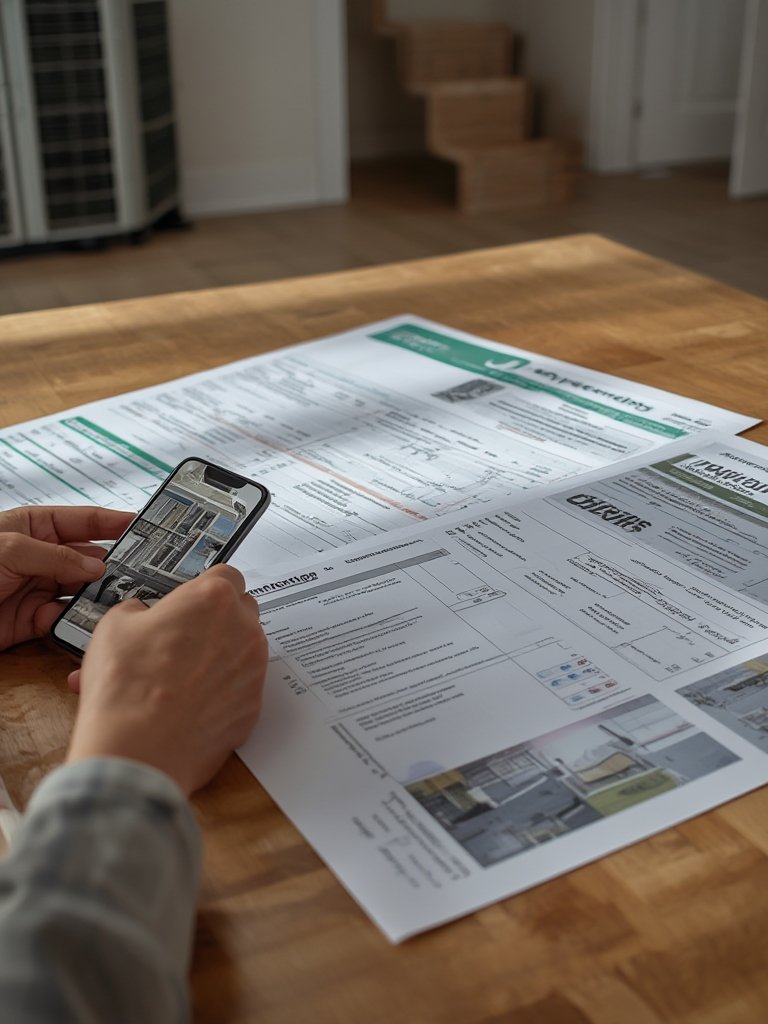
How to claim: Step-by-step actionable plan
- Read the 2025 rules on the official IRS credit page.
- Choose upgrades that are IRS-listed and buy only from manufacturers with a QMID (Qualified Manufacturer Identification Number). Never assume any “efficiency” label is enough.
- Before installation, get written proof of product specs: Energy Star Most Efficient for windows/skylights, IECC compliance for insulation, and CEE or Energy Star for heat pumps.
- Get every invoice with labor and material clearly separated (labor counts for some, not all, items). Avoid combined or summary invoices where the IRS cannot distinguish costs.
- Take photos of installed products next to receipts. This is optional, but helpful if audited or asked to show proof of a placed-in-service date.
- Save a complete copy of your contractor’s business license and installer certifications if needed (some credits require this if not owner-installed).
- Fill out IRS Form 5695 in 2026 for the 2025 tax year, carefully splitting items across the “improvements” and “residential energy property” sections. File your QMID and model data where required on the form.
Insulation tax credit and documentation details
For all insulation and air sealing claims, labor for installation can count, but must be separately itemized. Products must comply with the IECC version in effect two years before your install, usually the 2023 standard for 2025 projects. Owner-installed products must still show manufacturer specs and an official QMID. R-value, product details, and a signed proof of installation are smart to keep. Read our pipe insulation foam guide for common project examples. For winter, you may also want to explore thermal curtains as a supplement, even if not all curtain products earn the tax credit.
Doors and windows – certifications, caps, and common mistakes
Every door claimed must be an external (weather-facing) door, Energy Star certified for 2025. Only $250 per door, up to $500 total, regardless of how many you install. If a door is replaced in part (like just glass or weather stripping – see weather stripping guide), the IRS will deny the claim unless the whole ENERGY STAR door is installed. Windows and skylights must meet the “Most Efficient” rating (not just base Energy Star), and the aggregate cap is $600. Model numbers and QMID are essential for each. Always attach written manufacturer statements for doors and windows. If your product doesn’t qualify or lacks a QMID, do not include it on your Form 5695.
Special $2,000 category: Heat pumps, heat pump water heaters, biomass stoves/boilers
These upgrades are handled in a separate bucket: 30% credit up to $2,000 each year. Qualifying products must meet very specific minimum efficiency levels (generally CEE highest tier or ≥75% thermal efficiency for biomass). Electrical enabling components (up to $600 per item) require installation with a qualified main property. Installing a panel upgrade alone, even with future heat pump plans, is not allowed for the energy-efficient home improvement credit. See the in-depth heat pump water heater tax credit breakdown for real-world examples and audit risk tips.
Documentation requirements for Form 5695 (2025 rules)
- Manufacturer QMID and Energy Star/IECC certificates
- Model numbers, performance/efficiency ratings, and date placed in service
- Contractor invoice showing costs split by materials vs labor
- Homeowner evidence for directly installed improvements
Advanced analysis & common pitfalls
Homeowners face more denials than they expect due to strict IRS and documentation missteps. While the 30% rule and annual caps seem simple, the implementation can easily trip up even careful filers.
| Pitfall | What Goes Wrong | How to Avoid |
|---|---|---|
| Missing QMID or manufacturer certification | IRS may reject or flag, resulting in a denied or delayed refund. | Get certificates before paying the contractor and save copies. |
| Labor reported incorrectly | Labor included for products where it is not eligible can invalidate the full claim. | Check the IRS list, labor only for certain items (e.g., insulation). |
| Enabling electrical components claimed alone | IRS denies claims if installed before the main qualifying property. | Always upgrade with, not before, your primary heat pump or HVAC system. |
| The product does not meet the certification standard | “Energy efficient” label alone isn’t enough for IRS limits. | Check for ENERGY STAR Most Efficient or relevant IECC compliance, not just marketing claims. |
| Exceeding annual or per-item caps | IRS will reduce or deny excess amounts automatically. | Use a worksheet or spreadsheet to log spending and caps as the year progresses. |
Other things to consider:
- The energy-efficient home improvement credit is nonrefundable: it can reduce your income tax, but any excess does not carry forward. Plan claims for a year when you owe taxes.
- Placed-in-service means installed and ready to use, not just purchased or delivered. A late install (even by one day into 2026) moves your right to claim.
- No aggregated IRS stats as of 2024: The IRS publishes lists of qualifying products and rules, but there’s no accessible data about claim approval rates, audits, or average dollar results. This makes following the IRS’s documentation and reporting guidance even more critical.
- If you want day-to-day comfort as well as tax savings, consider pairing upgrades. For example, whole home energy monitors for bedrooms and whole home energy monitors can supplement central upgrades, though they may not earn the credit themselves.

Conclusion
Taking the energy-efficient home improvement credit in 2025 requires careful upfront planning, strict documentation, and honest evaluation of IRS rules. If you want to get the most from your upgrades without risking a denied credit, put documentation at the center; every receipt, certificate, and QMID matters. Take time to verify each upgrade before you spend, and keep a simple folder of proof for your tax files. The reward: a reduced tax bill, a comfier home, and the satisfaction of doing it correctly.
If you’re still uncertain about qualifying products or paperwork, check the FAQ section below, follow the seven-step claim checklist, and review the official IRS Form 5695 instructions. Don’t leave your credit up to chance.
FAQ
Are labor costs covered by the energy-efficient home improvement credit in 2025?
Labor costs are only eligible for certain improvements, like insulation and specific air sealing work, if itemized separately. For windows, doors, and some HVAC property, usually only product/material costs apply. Always check the current IRS instructions before claiming labor.
How do I know if my window/door purchase qualifies?
Windows must be ENERGY STAR Most Efficient certified and have a manufacturer’s QMID. Doors must be Energy Star certified. Each must be documented by the manufacturer, and you must attach or retain this with your tax records.
Can I claim both the $1,200 and $2,000 credits in the same year?
Yes, if you install eligible property in each category: for example, you can claim up to $2,000 for a heat pump and up to $1,200 for other qualified improvements (like insulation or doors) in the same tax year.
What happens if I submit Form 5695 with a missing QMID or documentation?
The IRS can deny or flag your claim for manual review, causing delays or full refusal. Always have your manufacturer certificates/QMID and placed-in-service proof before filing.