Smart blinds Matter is now the essential standard when choosing automated shades for commercial spaces or tech-minded homes. If you want shades that really work seamlessly with Alexa, Google, or HomeKit, and not get trapped by proprietary bridges or flaky apps, read this guide first.
Key Takeaways
- Buyers should prioritize Matter and Thread support if they want reliable, cross-brand automation and direct Alexa/Google/HomeKit integration.
- Upfront costs per window range from $150 to $1,200, depending on motor type and installation, while ongoing support and compatibility depend on both the device and the chosen ecosystem.
- Real interoperability and setup simplicity are best from Matter-certified brands like Eve Systems, SmartWings, and Zemismart, while legacy vendors such as Lutron still focus on proprietary RF.
- Why Matter matters for smart blinds and shades
- 2024 market snapshot, adoption, scale, and where demand is growing
- How Matter + Thread changes setup, responsiveness, and local control
- Matter-certified vs traditional motorized retrofit and non-Matter automated shades, real tradeoffs
- Common installation and usage pain points (knowns and research gaps)
- Technical checklist, Thread connectivity requirements, limits, and impact on responsiveness
- Cost expectations and total cost of ownership (hardware, installation, ongoing)
- Who’s leading right now, brands, retrofit kits, and cross-platform compatibility
- Expected timeline and adoption signals for broader Matter/Thread support
- Three crucial sub-topics competitors aren’t covering (content opportunities)
- Actionable buyer checklist and decision matrix (final takeaway)
- Sources, methodology, and recommended next steps for reporting
- FAQ
Why Matter matters for smart blinds and shades
Matter is a connectivity standard designed to end the fragmentation in smart home automation. If you have bought automated window coverings before, you probably ran into hurdles like closed ecosystems, the need for extra bridges, or awkward integrations. The point of Matter, especially for smart blinds Matter products, is simple: guaranteed interoperability across Alexa, Google Home, Apple HomeKit, and other platforms, no matter which brand or vendor you pick.
- No more clunky vendor bridges or five different apps for five different sets of shades.
- Direct control and automation that work regardless of manufacturer, so commercial and residential buyers can mix and match brands.
- Smoother integration with wider workflows like lighting, HVAC, and security automations in multi-site or multi-room setups.
However, be realistic: Matter only solves platform and device interconnectivity. It does not address physical install complexity, occasional bugs with new ecosystems, or guarantee perfect reliability yet.

2024 market snapshot, adoption, scale, and where demand is growing
In 2024, the global automated blinds and shades market hit US$16.2 billion, projected to reach US$24.1 billion by 2034, with a 4.5 percent CAGR. Matter is now a cited driver, with increasing commercial and residential projects demanding open standards. Meanwhile, the US electric blinds market alone saw $320 million in revenue in 2024 and is on track for a 22 percent CAGR to $2.5 billion by 2034 (source).
Smart device penetration matters: in 2024, about 69.91 million US households used smart devices, up by 10.2 percent. This surge drives vendor support for smart blinds compatible with Alexa and fuels the push for Matter. Automatic blinds have a 71.7 percent market share by sales, with residential demand dominating, but commercial adoption is rising for wider control and energy efficiency.
How Matter + Thread changes setup, responsiveness, and local control
Matter relies on Thread, a next-gen wireless protocol designed for smart home mesh networks. Matter smart shades that support Thread bring real advantages compared to earlier Bluetooth or Zigbee options:
- Instant setup, fewer bridges: Thread mesh means your blinds communicate directly with your Thread hub or controller, such as a Google Nest Hub Max or Apple TV 4K.
- Better responsiveness: Thread enables low-latency local control rather than routing every command through the cloud, so blinds respond to schedules, sensors, or voice much faster.
- Lower power use: Thread is efficient for battery-powered devices like shades, extending battery life and stability in larger mesh networks.
- Openness: Devices like Eve MotionBlinds or SmartWings Thread-enabled kits can join any major ecosystem, so you are not locked to just one platform or blocked by a lack of future support.
What do you need? A Matter/Thread hub (Google Nest, HomePod Mini, Echo 4th Gen, or similar) to act as a “border router.” Not every home router has this built in yet, so always verify device support before buying. Also, older Zigbee or WiFi blinds cannot join a Thread mesh unless you swap motors or install a new Thread controller.
Matter-certified vs traditional motorized retrofit and non-Matter automated shades, real tradeoffs
The choice is now clear: pick between modern Matter smart shades or stick with premium, proprietary RF systems. Here is what you get with each approach:
| Feature | Matter-certified (Eve, SmartWings, Zemismart) | Traditional/Proprietary RF (Lutron, Hunter Douglas) |
|---|---|---|
| Setup | Quick, app-based, no bridges needed | May require vendor hub, pro install, custom programming |
| Ecosystem Integration | Alexa/Google/HomeKit/IFTTT; open standard | Usually closed, might support Alexa/Google via cloud or bridge only |
| Latency & Local Control | Low responds instantly | Typically low, but only when using vendor controls |
| Reliability | Improving; open, but new standard bugs are possible | Proven in demanding applications; locked to the vendor |
| Vendor Lock-In | No, can swap brands over time | Yes, switching means replacing the whole system |
| Retrofit Complexity | Simple, drop-in kits exist for many shade types | May need a professional on-site visit |
No hard data yet on direct reliability comparisons. In general, choose Matter if you want open integration and future flexibility, but stick with high-end proprietary RF if absolute uptime trumps everything else in your specific application.
Common installation and usage pain points (knowns and research gaps)
The research found no direct 2024 user complaint dataset for Matter smart blinds on Alexa platforms. Still, based on installer reports, forum posts, and vendor sites, buyers commonly encounter:
- Compatibility surprises: Not all blinds work with all hubs out of the box. Matter brings consistency, but only where both devices support the latest firmware.
- Installation complexity: Some retrofits are tool-free and quick. Others (especially wired power) demand measuring, drilling, and awkward mounting.
- Battery vs wired: Battery is flexible but needs recharging, which can be annoying in large installs. Wired is set-and-forget, but trickier to install and costly to run new circuits.
- Voice integration bugs: Alexa, Google, and Apple Home all support Matter, but voice controls can still fail due to firmware delays or wonky device naming schemes.
The research did not uncover a concrete, up-to-date review dataset with hands-on installation and pain-point reporting for smart blinds compatible with Alexa. The best way to source this is to check verified buyer reviews or consult pro installers familiar with both Matter and proprietary systems. As a practical resource, you might want to review user experiences with other smart gadgets that solve everyday problems since similar installation hurdles occur.
Technical checklist, Thread connectivity requirements, limits, and impact on responsiveness
- Hub/Controller: You need a Matter/Thread-compatible border router (e.g., Google Nest Hub Max, HomePod Mini, newer Alexa Echo) to connect smart shades Thread products locally.
- Power/Battery: Decide up front. Battery-based products are more flexible but require regular recharging or battery swapping. Wired = more work, higher install cost.
- Mesh Topology: Thread is self-healing, so more Thread devices = better network coverage. Avoid putting all shades at the edge of the WiFi range.
- Device Count: Each Thread border router typically manages 50-100 endpoints. For very large installs, plan to add more hubs and segment rooms if needed.
- Latency: Thread means sub-second response for open/close and automation triggers. Real-world delays usually point to a slow cloud platform or poor WiFi rather than the blinds themselves.
- OTA Updates: Check whether the vendor supports direct firmware updates via their app or Matter API.
- Vendor caveats: Premium brands like Lutron and Hunter Douglas are not yet adopting Thread/Matter widely. Always confirm before specifying for a mixed environment.
For details on related low-voltage and energy-automation infrastructure, see our home energy monitor guide.
Cost expectations and total cost of ownership (hardware, installation, ongoing)
Expect to pay $150 to $1,200 per window for motorized smart blinds, including Thread-enabled and retrofit kits, in 2024. Entry-level DIY kits are at the low end. High-end custom installations for large windows or commercial spaces are at the top. This band covers most market options, such as Eve MotionBlinds.
- Hardware: Motor types, remote controls, and built-in Thread radios influence cost.
- Installation: Typical cost is not broken out in the research, but pro installs are often at least as much as the shade price per window when wiring is needed.
- Ongoing: Battery changes every 1-2 years, occasional firmware/maintenance, sometimes hub replacement or upgrades.
- DIY vs Pro: Retrofit kits (like Eve, SmartWings) let competent DIYers save money, while full pro jobs add reliability and project management but can double total cost.
Lack of detailed cost breakdowns is a research gap. For similar project cost structures, you may also check our article on pipe insulation foam or window insulation kit pricing, as labor/retrofit costs have some overlap.
Always budget for extra controllers/hubs if your install exceeds 50+ devices or has complex zoning needs. For energy savings, integrating with a thermostat is an increasingly common arrangement. See our smart thermostat rebates post for related synergy and rebate info.
Who’s leading right now, brands, retrofit kits, and cross-platform compatibility
The real Matter/Thread standouts in 2024 are:
- Eve Systems: Market leader with Thread-enabled MotionBlinds retrofit kits. Reliable support for Alexa, Google, Apple Home, and a strong history of firmware updates.
- SmartWings and Zemismart: Both offer Thread connectivity for automated window shades, integrating with most major platforms without bridges.
- Proprietary laggards: Lutron and Hunter Douglas are famous for reliability but only work with their own RF bridges and are slow to announce Matter/Thread support. Changing ecosystems later is likely expensive or troublesome.
Brands like Eve and SmartWings are safest for pilots and early adoption. Mix in others with caution, especially for commercial or multi-location installs.
For more tips on efficient home upgrades, check our list of the best home gadgets you can deploy in parallel for comfort or automation.
Expected timeline and adoption signals for broader Matter/Thread support
No vendor surveyed provided an exact public roadmap for Matter/Thread rollouts in the shade industry. Still, rapid growth is expected from now until 2034, mirroring a projected 22 percent CAGR in the United States.
Indicators to watch include:
- Firmware upgrade announcements or new product launches signaling direct Thread integration.
- Distributor and major channel listings of “Matter Certified” shaded products.
- Partnerships between shade vendors and big platforms (Amazon, Apple, Google) that guarantee verification and support.
Lutron and Hunter Douglas are frequently named by installers as “slow to the party,” so buyers considering enterprise-wide deployments should request written commitments on compatibility timelines. Direct interviews with these vendors are the best path to verifying futureproofing. This is particularly true if you are planning large-scale commercial procurement or need rolled-out deployments at scale.
Three crucial sub-topics competitors aren’t covering (content opportunities)
- Installation and recurring costs, detailed: No popular articles break down labor, hub, and battery replacement separately. Original reporting here, like collecting installer quotes, would offer real buying power.
- Long-term reliability and failure rates: No empirical data exists comparing the reliability of Matter Thread vs proprietary RF systems. Field testing, warranty analysis, or installer interviews would close this gap.
- Multi-brand, multi-room Thread mesh stress tests: There are no guides yet on cross-vendor, cross-ecosystem stability (for example, mixing Eve, SmartWings, and Zemismart in one building). Reporting or hands-on testing of these setups would distinguish your research.
Filling these gaps takes direct data from installers, dozens of real buyer reviews, and at least one hands-on multi-device setup.
Actionable buyer checklist and decision matrix (final takeaway)
Use this quick decision grid to match your needs to the right shade solution. Base your tradeoffs on the dominant $150–$1,200 per window price range, and remember that fully automatic blinds now lead market share (71.7 percent globally).
- DIY Homeowner: Opt for Matter-certified retrofit kits (Eve, SmartWings). Check for Thread controller/hub, battery type, and direct Alexa compatibility. Avoid closed RF unless you accept lock-in and proprietary apps.
- Integrator/Installer: Choose Matter/Thread for mixed-ecosystem sites. Document client’s ecosystem (Alexa/Google/Apple/HVAC linkage). Specify Thread device support and confirm install workflow: mesh coverage, battery vs wiring, per-room zoning. Prioritize brands with regular firmware updates. Watch for firmware stability issues on the newest platforms.
- Commercial Procurement: Request Matter certification in RFPs. For large-scale sites, validate hub and mesh capacity for device count. Plan for dual-source redundancy (at least two hub/router vendors) and ongoing support for firmware/remote diagnostics. Avoid putting all shades on a single proprietary gateway unless uptime is proven and documented with SLAs.
- Red Flags: No Thread/Matter support, lack of direct Alexa/Google/HomeKit integration, vendor unable to confirm upgrade path, or any system requiring separate, closed gateways.
For more actionable guides on home upgrades and comfort, explore our deep reviews on thermal curtains, or see how smart plug energy monitoring can complement window automation in your setup.
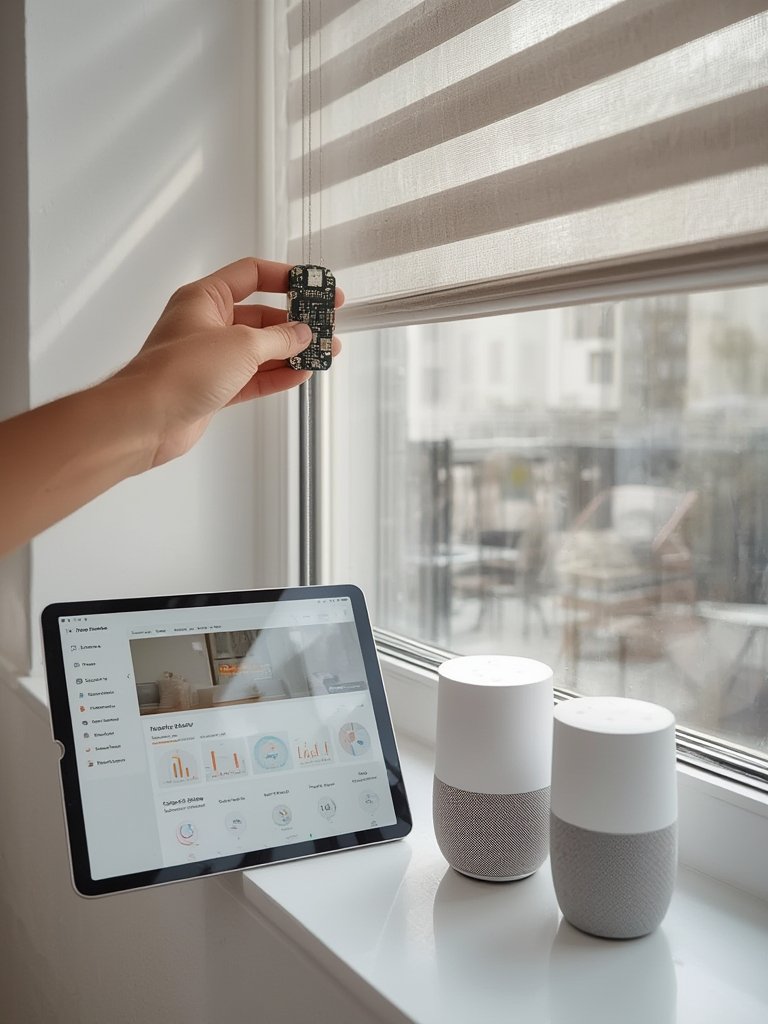
Advanced analysis & Common Pitfalls
Here are the main traps, bugs, and sources of friction for buyers and installers of smart shades Thread systems:
- Firmware mismatches: Old Thread hubs might not support the latest Matter version. Always upgrade first before adding new devices.
- Hub overload: Exceeding router-device limits leads to random disconnects and lag.
- Poor power planning: Too many battery shades in high-use areas lead to frequent recharging, which is frustrating for commercial clients. See if wiring is possible for the main traffic spaces.
- Voice command errors: Especially in Alexa or Google set-ups when device names overlap, or local language is inconsistent.
- Vendor evasiveness: If a company will not provide Matter/Thread support details, expect pain during integration or upgrades later.
| Pitfall | Who it affects | Solution |
|---|---|---|
| The installer can’t join blinds to the Thread mesh | DIY/pro integrator | Update firmware, check hub compatibility, and confirm the device is Matter certified. |
| Blinds are slow to respond or drop offline | Commercial buyers with many windows | Add more Thread routers, audit mesh topology. |
| Integration fails after platform update | All users | Wait for vendor patch, check online forums for roll-back options. |
Keep your expectations practical: Matter is robust, but still new. Factor time for support calls and patching during your rollout window, and if possible, do a hands-on pilot before scaling up.
Conclusion
Smart homes and commercial projects should start spec’ing smart blinds Matter as the new default for wireless shades. It is the only realistic way to ensure Alexa, Google, and Apple platforms play nicely now and in the future with minimal vendor lock-in or rework costs. Price bands are transparent, setup is faster, and you get more future options for automation and upgrades. Before buying, verify Thread controllers, check device compatibility, and insist on hands-on tests or installer quotes for your unique window set. Get started with a pilot from Eve MotionBlinds or SmartWings and watch your automation possibilities open up.
Ready to automate smarter? Compare systems, check local installers, or browse our full roundup of smart home problem solvers next.
FAQ
What is the difference between Matter and Thread for smart blinds?
Matter is the interoperability standard ensuring devices work across platforms like Alexa, Google, and Apple Home. Thread is the wireless mesh technology Matter uses to enable fast, reliable, and low-power connections without vendor bridges. You typically need both for the best experience.
Do I need a special hub for Matter smart shades with Thread?
Yes. You need a Thread border router that supports Matter, such as recent Google Nest Hub models, Apple HomePod Mini, or certain newer Alexa Echos. Not every smart home hub supports Thread and Matter yet, so double-check before purchase.
Are Matter-enabled blinds more expensive to install?
Not always. While the hardware can be pricier up front, DIY retrofit kits (like Eve or SmartWings) keep install costs down. Wired power adds to the budget. Lack of bridge hardware can also reduce total cost compared to proprietary systems.
Which brands currently sell the most reliable Matter smart shades?
Eve MotionBlinds, SmartWings, and Zemismart are the most advanced for Thread and Matter integration in 2024. Lutron and Hunter Douglas are reliable but remain closed to open standards, so integration is harder and future support is uncertain.
Is purchasing proprietary RF blinds still a good idea?
If uptime and proven reliability are your absolute top priority, and you are not worried about compatibility or future upgrades, proprietary RF systems from premium brands like Lutron remain excellent. But they limit long-term flexibility and interoperability.