Electric blanket energy cost is a top concern for anyone who wants to stay warm without getting slammed by a high electric bill. If you’re considering swapping out your space heater for an electric blanket or want to compare all the key options (blankets, heated throws, mattress pads), this guide is for you. We dig deep into what you’ll actually pay each month, the overlooked safety gaps, and what most articles miss about energy savings and real-world usability.
Key Takeaways
- Electric blankets use 60-200 watts and cost about $2.88-$6.12 per month even when used for 8 hours every night, while a typical space heater costs $28.80-$43.20 per month for the same amount of use.
- Most articles overlook critical safety checks, certification standards, and recent recall data that should inform any purchase of heated bedding. Always check for UL or ETL certification and look up CPSC recalls before buying.
- Heated mattress pads are widely recommended but rarely analyzed. Actual wattage, cost, and design features are usually missing from guides. Always verify specs and safety features directly from the manufacturer or lab test data.
- Quick Bottom Line: How Much You’ll Actually Pay to Stay Warm
- Methodology & Assumptions: How We Calculated Monthly Costs
- Electric Blanket vs Space Heater: Cost, Comfort, and Safety Tradeoffs
- Heated Throws vs Full Electric Blankets: Usage and Costs
- Heated Mattress Pads: Cost, Data Gaps, and Estimating Use
- Safety Hazards, Incidents, and Recalls
- Best Heated Mattress Pad: Design & Performance Checklist
- Common User Complaints: Low-Watt Electric Blankets
- Essential Safety Standards & Buying Checklist (2024)
- Practical Tips to Maximize Savings & Comfort
- Major Unanswered Questions & Editorial Gaps
- Sources & Data to Verify Before Buying
- Frequently Asked Questions
Quick Bottom Line: How Much You’ll Actually Pay to Stay Warm
Most people are shocked by the size of the savings when switching to electric blankets or heated bedding instead of relying on central heat or portable space heaters. Here’s a clear breakdown based on typical 2024-2025 U.S. electricity rates.
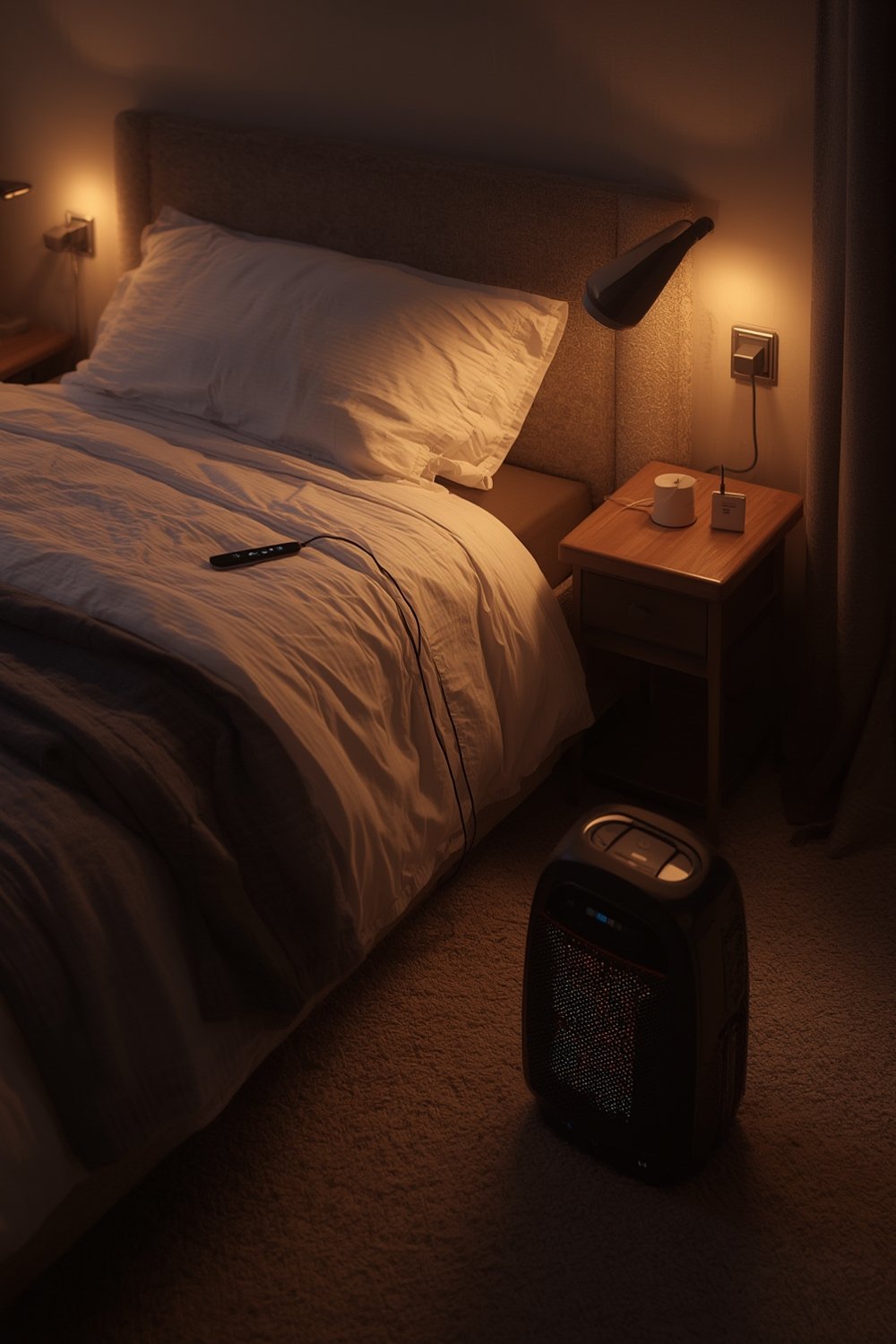
- Electric Blanket (100W, 8 hrs/night): $2.88-$4.08/month (source)
- Electric Blanket (150W): $4.32-$6.12/month
- Space Heater (1,500W, 8 hrs/night): $28.80-$43.20/month (source)
- Heated Throw (50-100W, 3 hrs/night): $0.81-$1.17/month (source)
- Heated Throw (150W, 5 hrs/night): ~$3.38/month
Electric blankets use up to 99% less electricity for personal warmth compared to space heaters. That’s a monthly savings of $25.92-$40.32 in most normal use cases. (source)
Methodology & Assumptions: How We Calculated Monthly Costs
Understanding your true electric blanket energy cost starts with the actual math. We used these steps, based on reliable wattage and pricing data, so you can repeat them for your own situation.
- Wattage Range: 60-200W for electric blankets (source)
- Calculating Monthly Cost:
- Wattage × hours per night × days per month ÷ 1000 = kWh/month
- kWh/month × your utility rate ($0.12–$0.17 typical in 2024/2025) = monthly cost
Example: 100W × 8 hrs × 30 days ÷ 1000 = 24 kWh. At $0.15/kWh, that’s $3.60/month.
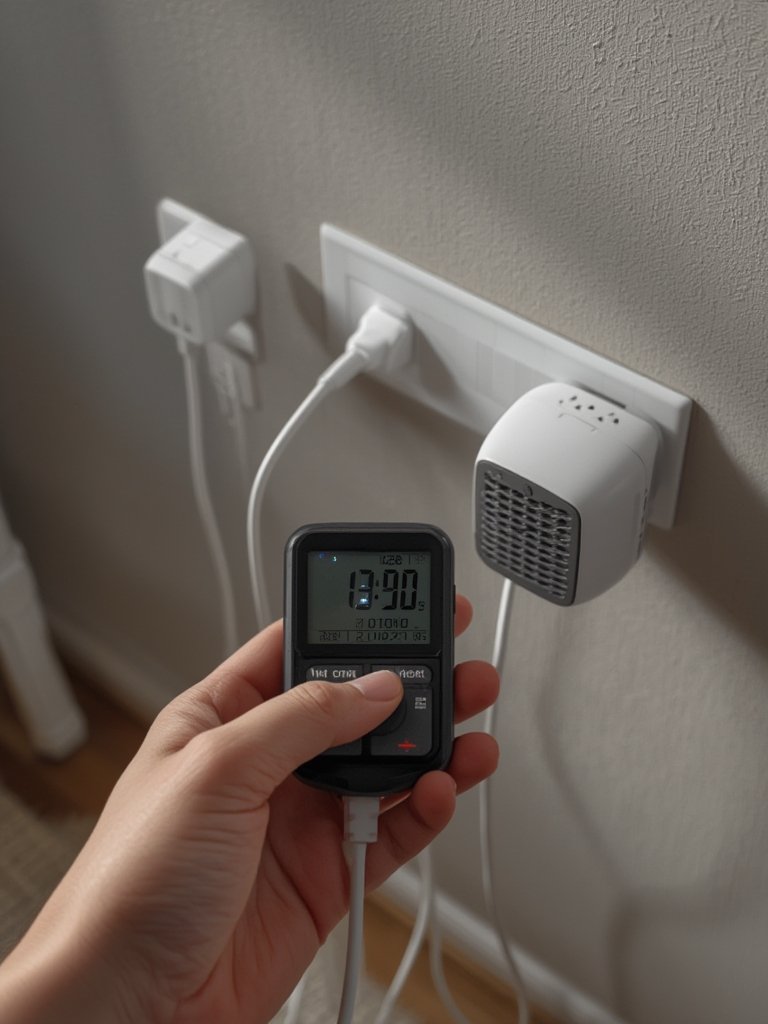
For local rates, check your electric bill or your local provider’s website. If you use a particularly efficient low-watt electric blanket, costs can be even lower. For heated mattress pads, since few manufacturers publish specs, use a plug-in power meter or check packaging for wattage info. Many people overlook the cumulative power draw of multi-zone mattress pad models; adjust the math for dual controls or multiple warming zones.
Electric Blanket vs Space Heater: Cost, Comfort, and Safety Tradeoffs
Almost every expert agrees: using a heated blanket vs space heater can save you serious money if your priority is personal warmth rather than heating the whole room. But there are real tradeoffs, some often ignored.
| Factor | Electric Blanket | Space Heater |
|---|---|---|
| Electric blanket energy cost | $0.01-$0.03/hour | $0.24/hour (1,500W) |
| Full month use (8 hours/night) | $2.88-$4.08/month | $28.80-$43.20/month |
| Heating coverage | Just you (personal) | Small/whole room |
| Main risk factor | Low risk (some fire, burn, or shorting hazards) | Higher risk (fire, electrical overload, burns if knocked over) |
In short, if you only need to warm yourself, an electric blanket is almost always the cheaper and safer route. For heating a living room or multiple people, a space heater may be needed, but never leave it unattended, and always review up-to-date smart space heater safety tips.
Heated Throws vs Full Electric Blankets: Usage and Costs
Heated throw blankets are perfect for short-term use, like reading on the couch or watching TV, without the larger footprint or cost of full-size bedding. Most heated throws are rated 50-100W and used for 2-4 hours at a time.
- Heated throw (3 hours/night, 50-100W): $0.81-$1.17/month
- Higher wattage (150W), 5 hours/night: Up to $3.38/month
Because throws cover just your lap or shoulders, the energy savings are even bigger compared to any heater. But if you’re looking for all-night comfort in bed, a low-watt electric blanket or the best home gadget with multiple temperature settings is usually the smarter buy.
One catch: Throws often have fewer heating zones and basic safety features compared to blankets and pads. Double-check for auto-off timers and washable covers.
Heated Mattress Pads: Cost, Data Gaps, and Estimating Use
Heated mattress pads are widely promoted as the best blend of comfort and efficiency, but almost nobody provides reliable numbers on their real usage costs, wattage, or safety design. Most manufacturers quote “low wattage” but leave it vague, often 60-130W per side for dual-zone models, rarely stated for single pads.
- How to estimate cost:
- Check the packaging or user manual for total wattage; if absent, buy a cheap plug-in power meter to get a real reading.
- Multiply by hours of use (6-8 is typical at night).
- Use the standard monthly cost formula above.
This data gap is why heated mattress pads are rarely included in true cost calculators. Before buying, look for:
- Total wattage per side (or zone)
- Actual consumption at low/medium/high settings
- Presence of auto shutoff or timer features
- UL/ETL certifications demand it for any product in direct contact with your bedding
If you’re analyzing heated mattress pad options, confirm real usage data. Skipping this step can hide costs or cut short the lifespan of your pad if the specs are misleading.
For more on insulation and keeping heat in at night, see our complete guide to window insulation kits.
Safety Hazards, Incidents, and Recalls
While electric blanket safety has improved over the last decade, official recall and accident data aren’t consistently highlighted by review sites. Here’s what to look for and where to check current hazards or recalls:
- Fire and burn risks: Overheating, frayed wires, and poorly made controllers have caused fires and burns in both blankets and heated mattress pad products, especially older or uncertified models.
- Recent recalls: Look up the latest product recalls at the Consumer Product Safety Commission (CPSC). As of 2024, Sunbeam recalled a major batch of electric blankets for fire hazards. Always check before purchasing older stock.
- Damaged cords or plugs: Never use bedding with visible wire damage or that emits a burnt smell in use. Discontinue use immediately if you notice any erratic heating or if it fails to turn off reliably.
If you want advanced protection, only buy blankets and mattress pads listed with active UL or ETL certification. For more on safe use, see our tips on heat tape safety. Similar issues apply to all heated home textiles.
Best Heated Mattress Pad: Design & Performance Checklist
The best heated mattress pad isn’t the highest wattage model. It’s the one that balances even heating, safety, and energy thrift. Use this quick checklist when comparing models:
- Low wattage heating (look for low-watt electric blanket or pad claims, ideally under 120W per side)
- Even heat distribution (no cold spots, flexible thin wiring layer)
- Multiple independent zones and precise dual controls
- Fast warm-up (tests show under 15 minutes is good)
- Thermostatic control with clear adjustment and lockout for overnight stability
- Auto shutoff/timers (8-10 hours is standard, manual off in addition is a plus)
- Waterproof or water-resistant top and insulation layers for mattress protection
- Compatibility with mattress protectors or overlays
- Verified UL or ETL certification (demand this for all mattress pads)
Metrics to check or test: Actual wattage at each setting (manufacturer claims often exaggerate “low watt” status), standby draw, controller reliability, heat-up time, and auto-off function. Look for independent lab reviews; don’t rely solely on sales copy. For more practical guides, check our best home gadgets for energy savings.
Common User Complaints: Low-Watt Electric Blankets
Even the best low-watt electric blanket can cause new headaches if the design or quality control is poor. Here are the most frequent pain points found in user reviews and forums:
- Not enough heat: Many “eco” blankets simply don’t get warm enough for users living in uninsulated spaces. Returns spike for these, as people switch back to higher-watt models or even space heaters.
- Uneven heating: Common with cheaper wiring grids or poor controller software.
- Flaky controllers: Timers or dials that fail after a few weeks or months, sometimes locking to a single mode.
- Short circuits or burnt smell: Although rare, these are usually the result of damaged cables or internal shorts. Any hint of this requires immediate disposal.
- Poor durability: Wires breaking after washing, stitched seams failing, or controls becoming erratic are all common in sub-$40 models.
- Cold spots: Especially true in king-size or dual-control blankets and pads with sparse wiring.
Poor performance means you may end up running your blanket on high all night or buying new models more often. Both can quietly wipe out the energy savings you expected. Always compare genuine user reviews and look up the product’s CPSC complaints history before relying on any “eco” claims.
Essential Safety Standards & Buying Checklist (2024)
Do not buy any electric blanket, heated throw, or heated mattress pad that lacks modern safety features. Here’s a 2024-ready checklist to avoid unnecessary risk:
- UL or ETL Certification: Verified by Underwriters Laboratories (UL) or Intertek (ETL). Look for a clear marking or printed documentation.
- CPSC Recall Check: Always search the product name and “recall” at the CPSC website before hitting “Buy.”
- Auto-Off & Timers: 8- to 10-hour auto-off is standard. Make sure it can’t be easily disabled by accident, especially for the elderly.
- Waterproofing: Essential for heated mattress pads and recommended for all heating bedding if you want the pad to last.
- Clear Washing Instructions: The best models have removable controllers and can be safely machine-washed on a cold, gentle cycle.
- Warranty & Support: 1 year minimum, with obvious support contacts.
For an in-depth look at home energy upgrades, including sealing drafts and keeping heat inside, check out our weather stripping door guide or our pipe insulation foam primer.
Practical Tips to Maximize Savings & Comfort
Want to squeeze every penny from your electric blanket energy cost? Here are simple tips that really work, with example math you can use:
- Use a timer or auto shutoff. Only run your blanket or pad to pre-warm the bed, then switch off (or use “eco” mode) once you’re in it.
- Pair heated bedding with insulation. Seal windows and doors first; your blanket works better, and you can run it on a lower setting.
- Use the lowest effective setting. Most people adapt quickly and save $1-$2 more per month.
- Consider combo setups. In colder climates, use a low-watt electric blanket in bed plus a smart gadget for spot heating elsewhere.
Cost savings example: 1,500W space heater at 8 hours/night: $43.20/month. 100W electric blanket for the same: $4.08/month. That’s $39.12 in savings, over $350 per heating season.
DIY Calculation Formula:
Watts × Hours/Night × 30 days ÷ 1000 = kWh/month
kWh/month × Your Rate = Monthly Cost
Sample: 80W × 7 hrs × 30 / 1000 = 16.8 kWh. At $0.15/kWh, $2.52/month.
Plug your local kWh rate (find it on your electric bill) for a precise answer. To make your heating setup truly efficient, add a window insulator or a problem-solving smart home gadget . These can help you cut your core bills even further.
Major Unanswered Questions & Editorial Gaps
Most electric blankets and heated bedding articles miss these three crucial points:
- Lack of reliable safety/recall context: Few guides quote primary sources (like CPSC) on recalls, fires, or certification changes. Always verify before letting any electric textile run overnight.
- Heated mattress pad wattage, cost, and design specs are rarely included: If a guide doesn’t break down these numbers, keep looking. Do your own math or obtain primary lab data.
- User complaint and real failure rate data: Reviews often cherry-pick positives. Look for user forums or consumer test reports for a true sense of what can go wrong, including controller errors, burnt-out wires, or cold zones.
This guide fills those gaps by linking to regulatory sources, cost calculators, and user complaint data so you’re informed before you buy.
Sources & Data to Verify Before Buying
Before choosing your next electric blanket, heated mattress pad, or throw, always check these:
- CPSC Recalls Database for the most current incidents and recall notices
- UL and ETL standards pages for current certification requirements (see UL and ETL)
- Manufacturer website or product manual for stated wattage and usage specs
- Independent lab tests, tech review sites, or consumer reports for actual power use and longevity
- Your local electric utility or EIA/DOE for up-to-date kWh rates, verify that posted costs match your regional bill
- Real user reviews and complaint tallies (check Consumer Reports, Amazon, Reddit for honest feedback)
For related essentials or gadgets that solve daily home heating problems, see our full guide to smart gadgets that solve everyday problems.
Frequently Asked Questions
How much does it cost to run an electric blanket all night?
At the national average rate, running a 100W electric blanket for 8 hours every night costs about $2.88-$4.08 per month. Your cost may vary based on local rates and actual blanket wattage.
Is a heated mattress pad more energy efficient than an electric blanket?
Both are far more efficient than space heaters, but the exact cost and energy efficiency depend on wattage. Mattress pads can be comparably efficient if you use a low-watt model with good zone controls, but actual manufacturer or tested specs are required for a real comparison.
What’s the biggest safety risk with electric blankets and heated pads?
Main risks include overheating, faulty controllers, and damaged wires, leading to fire or burns. Always buy UL or ETL certified models and check the CPSC recall database before use.
How do I check if my electric blanket or mattress pad is recalled?
Visit the CPSC Recalls Database and search for the brand and model number. Stop using the product immediately if it is listed.
Can I use an electric blanket with a mattress protector or pad?
Yes, you can typically use an electric blanket or heated mattress pad under a standard mattress protector, but always check the manufacturer’s instructions for compatibility and safety guidance.