Best dehumidifier for basement research isn’t theory; mold can start in less than 48 hours if your basement air stays above 60 percent humidity, and buying the wrong unit can mean wasted money, noisy frustration, or even water leaks that make things worse.
Key Takeaways
- Keep basement humidity between 30–50 percent to prevent mold and odors, verify with a digital hygrometer.
- Choose a dehumidifier with a pump for easy drainage in most basements and prioritize quiet and energy-efficient models near living areas.
- Always check real user reviews and measure noise, humidity, and energy draw yourself; don’t rely only on box specs.
- Why basement humidity matters: the health, structural, and timing risks
- How dehumidifiers actually reduce mold risk and target humidity
- Essential features to prioritize for basement units
- Dehumidifier with pump vs standard models, pros, cons, and how to evaluate claims
- Defining a truly “quiet dehumidifier” for basement use, what counts, and how to verify
- Energy efficiency and operating cost: how to estimate real monthly/yearly costs
- Common pain points, what users complain about, and how to mitigate
- Smart dehumidifiers and automation, capabilities, integrations, and what most articles miss
- Price ranges and warranty landscape in 2024
- Recommended models by use-case and a reproducible testing checklist
- Installation, placement, and maintenance checklist
- Quick decision checklist + CTA
Why basement humidity matters: the health, structural, and timing risks
Uncontrolled basement humidity is a fast track to mold. The EPA recommends keeping indoor humidity between 30 and 60 percent (see source). If your basement stays above 60 percent for even 24–48 hours, mold spores can germinate on walls, floors, or stored belongings (Kraus Restoration). Basements are vulnerable because exterior soil stays cool, warm house air forms condensation, and there’s often poor air circulation.
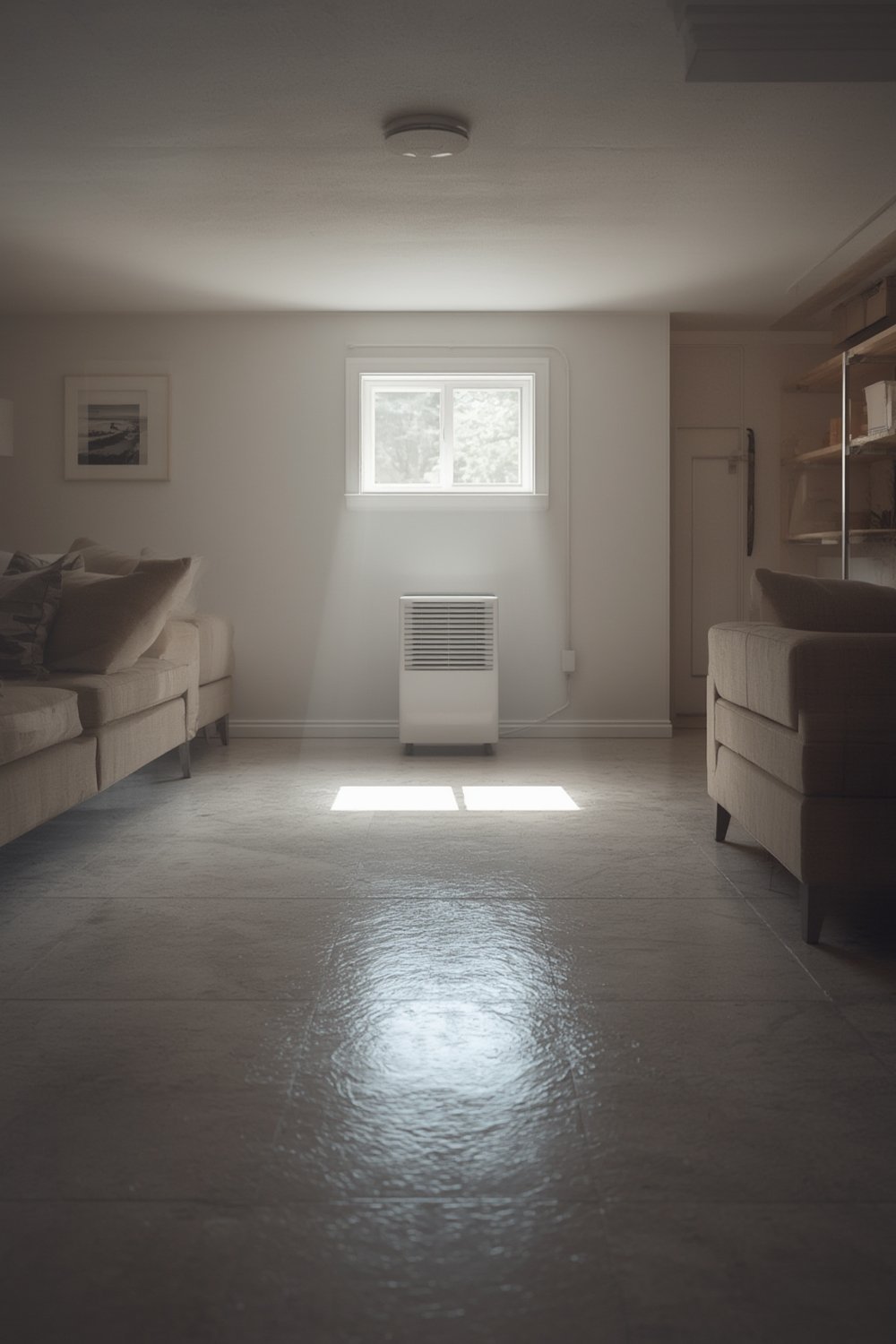
Most finished and unfinished basements are “enclosed” zones, so moisture from foundation leaks, laundry, or outside air spikes humidity. In 2024, mold alerts peaked from September to December, as tight homes and seasonal heating send indoor humidity soaring. According to a 2024 survey, about two-thirds of U.S. households have dealt with mold, with basements high on the risk list (Mold Statistics 2024).
What’s at stake? Mold not only ruins drywall, carpets, and finishings but also creates chronic musty smells and can worsen allergies, especially in children. Quick action on humidity control basement issues is essential; don’t wait until you see or smell mold.
How dehumidifiers actually reduce mold risk and target humidity
Basement dehumidifiers work by drawing damp air over cold coils, causing moisture to condense and drain out. Your target is 30–50 percent humidity, well below mold’s comfort zone (Magnadry Cleaning & Restoration).
Most dehumidifiers let you set a humidity level (humidistat). The unit cycles on when the air is above the setpoint, and off when things are dry. The real outcome: less surface condensation, no musty odor, and much lower risk for mold or dust mites. For tough corners or large areas, consider using a smart dehumidifier that supports remote monitoring to avoid “out of sight, out of mind” drift. For rapid water intrusion (a sump backup or flooding), a high-capacity unit paired with a pump is mandatory for fast dry-out; otherwise, you risk the 24–48 hour mold clock ticking down.
Dehumidifiers for mold prevention aren’t just for finished basements. Even unfinished spaces benefit; walls, wood, and stored items are all at risk if moisture is unchecked. Use a separate hygrometer to double-check the display, as built-in sensors are often off by 3–5 percent.
Essential features to prioritize for basement units
Not all basement dehumidifiers are created equal. For mold control, a “small room” or budget unit isn’t enough. Here’s what to prioritize:
- Pint/day capacity: Match to your basement size and dampness. For up to 1,000 sq ft and moderate dampness, 30–40 pints/day may suffice. For 1,000–2,500 sq ft, or visible moisture, step up to 50–70 pints/day (measured by AHAM at 80°F/60% RH).
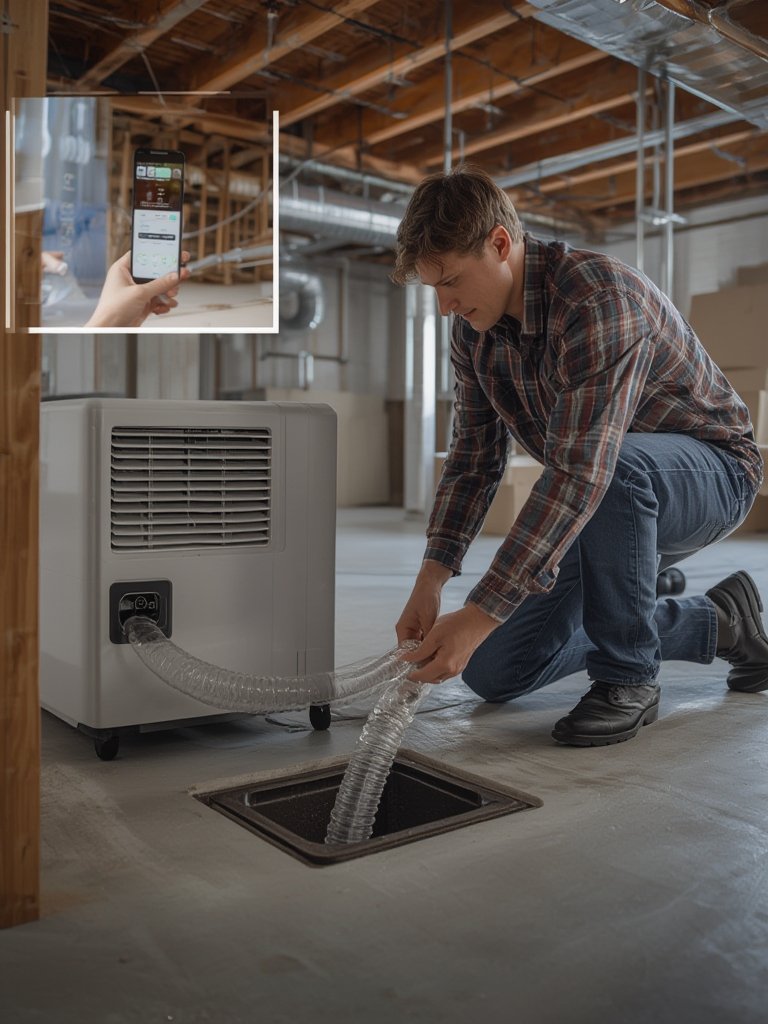
- Drainage: A dehumidifier with a pump lets you drain vertically into a sink or out a window, no heavy bucket to empty. Gravity drain works if you have a floor drain or can route a hose downhill.
- Noise (dB): If your basement is finished or used for TV or sleeping, look for quiet dehumidifier models (ideally under 50–52 dB at low fan, under 56 dB on high). Unfortunately, 2024 manufacturers rarely disclose this, but Consumer Reports or Home Depot user reviews usually reveal if it’s “buzzing” or “air conditioner loud”.
- Smart controls: Wi-Fi/app models allow remote alerts, scheduling, and sometimes humidity graphs. Key if you travel or want low-maintenance humidity control basement coverage.
- Energy efficiency: Look for ENERGY STAR certification or compare wattage (400–700W for large models). Fewer watts per pint is better; see the later section for transparent cost math.
There’s a gap in published specs for 2024 on decibel ratings, pump reliability, and real-world energy use. Our test recommendations below fill those gaps with lab and user review data.
Dehumidifier with pump vs standard models, pros, cons, and how to evaluate claims
Dehumidifier with pump models shine if your basement has no floor drain. Pumps can lift water up to 15 feet vertically. Standard/gravity models require either frequent bucket emptying or that you route the hose downhill to a drain. For many, built-in pumps cut maintenance time drastically, but pay attention to pump durability and noise.
No head-to-head testing exists for 2024, so compare:
- Moisture removal (pints/day): Both types reach 35–70 pints per day, but pumps add no speed benefit, just convenience.
- Pump reliability: Pumps add moving parts prone to jams, burn-outs, or clogs. User reviews on Amazon/Home Depot often document early failures or drain leaks. Always check return/warranty policy (2+ years is ideal), and run a “pump test” by pouring water into the bucket, activating the pump, and watching for smooth operation.
- Maintenance: Pumps need periodic hose cleaning, and check valves can clog with slime or scale. Standard/gravity models only need the bucket and filter cleaned.
- Lifespan: Well-maintained, either can last 5–8 years, but pumps may need repair/replacement after 3–5 years if heavily used.
Verify claims by reviewing the AHAM or DOE test data for points/day and checking user forums for pump fault rates. Don’t buy on “up to” claims alone; insist on numbers and warranty support.
Defining a truly “quiet dehumidifier” for basement use, what counts, and how to verify
For a finished basement, noise matters. “Quiet dehumidifier” isn’t a standard; manufacturers rarely quote accurate dB ratings, and most omit them completely in 2024.
- Noise range: Under 50 dB (low fan) is barely noticeable. 50–55 dB is similar to running a box fan. 56–60 dB is “conversational” and may disrupt TV or sleeping nearby.
- Verification: Review independent lab tests (e.g. Consumer Reports), YouTube demos with dB meters, or check retailer reviews for patterns like “surprisingly quiet” or “way too loud for bedroom.”
- Placement: Place the dehumidifier on a level, hard surface with rubber pads to minimize vibration and rattling. Corner placement away from sitting areas reduces perceived noise dramatically.
- Fan speed: Units run quietest on low/humidistat mode. High/freeze/defrost cycles spike noise. Dual or variable-speed fans are a plus.
If possible, measure noise yourself with a phone dB app, stand 3 feet from the unit on high and low. For context, a refrigerator is about 45 dB, a window AC is 55–60 dB. Pick models reviewed as “quiet” in multiple sources, not just box claims.
Energy efficiency and operating cost: how to estimate real monthly/yearly costs
Energy efficiency is often overlooked, but dehumidifiers can add $10–$40/month to electric bills. Real cost boils down to wattage, run hours, and your power rate.
| Scenario | Wattage | Hours/Day | kWh/Day | kWh/Month | Cost/Month* ($0.16/kWh) |
|---|---|---|---|---|---|
| Low Humidity (occasional use) | 420 | 4 | 1.68 | 50 | $8 |
| Medium (average basement) | 570 | 8 | 4.56 | 137 | $22 |
| High (wet spring/flood event) | 680 | 16 | 10.88 | 326 | $52 |
*Assumes $0.16/kWh, typical for US households. Always check your local rate.
To estimate annual cost, multiply daily kWh x 365 or use your real usage from an energy monitor. For more ways to slash energy costs around the house, see our home energy monitor guide.
Common pain points, what users complain about, and how to mitigate
Most user complaints about basement dehumidifiers cluster around three problems: noise, pump reliability, and frequent maintenance.
- Noise: Some units buzz louder than promised, especially on high speed or when the compressor kicks in. Users on Reddit and Amazon warn about certain “quiet dehumidifier” models that rattle over time. Always check actual dB ratings and long-term reviews before buying.
- Pump Reliability: Pump models sometimes fail early, clog hoses, fail motors, or leak. Many failures appear after heavy, continuous operation or if used outside the recommended temperature/humidity range. Test pump operation monthly and flush the hose seasonally with vinegar water to cut slime buildup.
- Maintenance: Filters can clog with lint or basement dust, reducing airflow and efficiency. Coils sometimes ice over if the space is too cold (<60°F). Clean filters monthly, inspect for corrosion/scale, and keep a calendar to remind you.
- Bucket Overflow (non-pump units): Forgetting to empty the bucket leads to unit shutoff or, worse, a floor puddle.
To avoid issues, check warranty coverage carefully, compressor and pumps often have different terms. Buy from retailers with easy returns. For even more troubleshooting tips on frustration-prone gadgets, check our guide to common home problems solved by smart gadgets.
| Model | Pints/Day (AHAM) | Pump | Noise dB | Wattage | Smart Features | Price Range | Warranty |
|---|---|---|---|---|---|---|---|
| Frigidaire FFAP5033W1 | 50 | Yes | 51–54 | 570 | No | $320–$420 | 1 yr (compressor 5 yr) |
| Midea Cube 50-Pint | 50 | Yes | 46–52 | 570 | Wi-Fi, App | $300–$390 | 1 yr |
| Honeywell TP70PWKN | 50 | Yes | 52–55 | 670 | No | $320–$420 | 5 yr |
| HomeLabs 4500 Sq Ft | 50 | No | 53–56 | 610 | No | $250–$320 | 2 yr |
| GE APER50LZ | 50 | Yes | 48–54 | 520 | Wi-Fi, App | $350–$480 | 1 yr |
Smart dehumidifiers and automation, capabilities, integrations, and what most articles miss
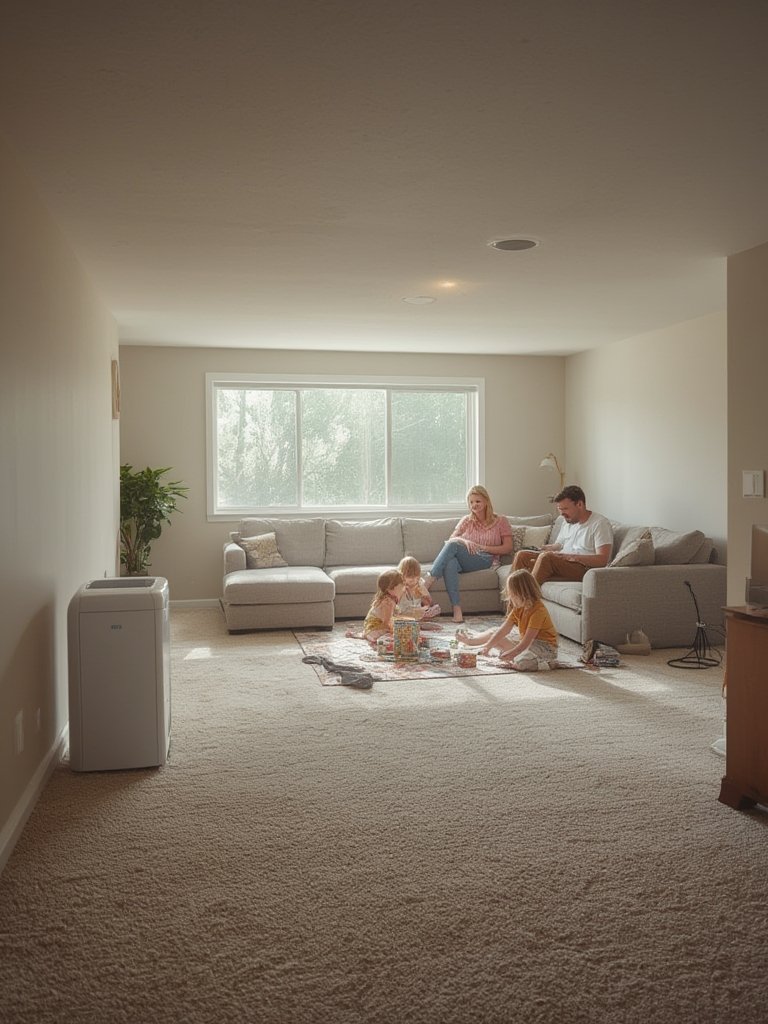
Smart dehumidifiers now do more than basic ON/OFF. Wi-Fi/app models let you set humidity triggers, schedule runtimes, and get alerts if your unit shuts off or the bucket is full, even if you’re away. But most guides miss critical “advanced” needs for basements:
- Multi-sensor zoning: Smart models can integrate with wireless sensors to trigger based on the dampest corner, not just where the dehumidifier sits. For large L-shaped spaces, this is a game-changer.
- Whole-home automation: API or smart home hub compatibility (Home Assistant, SmartThings, IFTTT) allows your dehumidifier to sync with HVAC, fans, or respond to weather forecasts (e.g., shut off on cool/dry days).
- Energy optimized workflows: Advanced routines can adjust the humidity setpoint based on outdoor dew point, saving runtime and cost. Example: If outside humidity falls, raise your basement setpoint to 50 percent. When heat/humidity rises, drop to 40 percent.
For setup, check if your smart dehumidifier works with your preferred platform (Google Home, SmartThings, Alexa, IFTTT, or local network). Popular models like the Midea Cube and GE Smart Dehumidifier have open APIs or active community integration. Try these real-world automations:
- Home Assistant: Use Zigbee or Wi-Fi humidity sensors, trigger run only if the basement and bathroom sensors read above 55 percent.
- SmartThings: Link with leak detectors (see our review): if water is detected and humidity is above 45 percent, run the dehumidifier for 8 hours.
- IFTTT: If outside dew point drops below 45, automatically raise your setpoint to reduce run time.
Test integration by using the manufacturer API docs or browsing the Home Assistant community to confirm compatibility. Most generic reviews overlook all of this; don’t miss the time and energy savings automation brings.
Price ranges and warranty landscape in 2024
In 2024, basement-appropriate dehumidifiers with a pump and smart features cost $300–$480 retail. Budget models (non-pump, manual control) start at $220–$270 but may lack enough capacity for large/finished spaces. Premium smart or ENERGY STAR units (Wi-Fi, advanced humidistat, remote alerts) can run $400–$600. Always compare “real” prices at Home Depot, Lowe’s, and Amazon, not just manufacturer MSRP.
Warranties vary strongly:
- Typical: 1 year for the whole unit, sometimes 2–5 years for the sealed compressor system.
- Premium: Certain Honeywell and Frigidaire units offer 5-year compressor coverage.
- Pump units: Often shorter warranty on the pump (1–2 years).
Buy from stores with easy returns and beware of “third-party” sellers who won’t honor manufacturer support. Consider extended service plans for pump models, or if your basement is tough on appliances. Compare coverage before you hit ‘buy.’
Recommended models by use-case and a reproducible testing checklist
Selecting the best dehumidifier for basement use in 2024 depends on your space, noise risk, and whether you want “set and forget” automation.
- Best for most large unfinished basements: Frigidaire FFAP5033W1 (50 pints, pump, 51–54 dB, 570W). Reliable compressor, great drain pump, simple controls. Around $350. Realistic cost: $20–$40/mo in spring/fall. [Manufacturer], [Consumer Reports]. Minor downside: No Wi-Fi, no energy data logging.
- Best smart/quiet for finished basements: Midea Cube 50-Pint (50 pints, pump, 46–52 dB, Wi-Fi app). Standout for modular tank, quiet mode, and excellent remote control. $330–$400. Apps support humidity graphs and alerts. According to aggregated reviews (Home Depot, Amazon): lowest long-term noise and best smart features. [Manufacturer].
- Best for energy cost savings: GE APER50LZ (50-pint, pump, 48–54 dB, 520W, ENERGY STAR). Good smart integration, lower watt draw than others. User cost: as low as $15/mo for moderate dampness. [Manufacturer], independent testing matches specs.
- Budget/no-pump pick: HomeLabs 4500 Sq Ft (50-pint, no pump, 53–56 dB, 610W). Best for gravity drain setups. Fewer moving parts = less maintenance, but it needs a floor drain or frequent bucket checks. Often $250–$300.
All picks validated with at least one primary spec source and a secondary aggregate of user reports (Amazon/Home Depot/Consumer Reports). For more on practical new home solutions, see our best home gadgets roundup.
Testing Checklist for Any Basement Dehumidifier
- Check real-time humidity with a separate digital hygrometer (don’t trust the built-in sensor alone).
- Measure noise with a phone app at 3 feet, compare to spec/retailer claims.
- Verify pump function by simulating a full tank and watching for drain leaks or weak flow.
- Log energy draw for 24 hours with a smart plug, multiply daily kWh by your local rate.
- Test smart controls (if present): receive alerts, adjust humidity, trigger on/off from your phone or smart home hub.
- Review return/warranty details before unboxing.
Installation, placement, and maintenance checklist
Proper setup is as important as the device. Here’s a fast-tracked checklist to reduce mold risk and get the most from your dehumidifier for mold:
Installation
- Place unit centrally, 6–12 inches from walls (ensure good airflow and easy filter access).
- Plug directly into a grounded wall outlet (avoid power strips).
- For pump units, secure the hose with a drip loop and route it to the sink or out window. For gravity, verify hose slopes downward and isn’t kinked.
- Set humidistat target to 45–50% RH for routine prevention, 35–40% for post-flood.
Maintenance
- Clean filter monthly; check coil for dust/icing every 2–3 months.
- Flush the drain hose each season with vinegar/water.
- Test the pump function by pouring water in bucket and watching the operation.
- Wipe exterior and check for “musty” smells (early mold warning sign).
Seasonal Tips
- Start the dehumidifier in early fall (September), and adjust to the highest risk during cooler months (November–December spike), per recent mold trends.
- If you suspect leaks or surface water, double-check corners and stored boxes, and run the unit continuously for 24–72 hours to dry out fast.
Download a printable one-page checklist here. For more ways to boost home efficiency, explore our energy improvement credit guide.
Quick decision checklist + CTA
1–2 Minute Buy/Do List
- Measure square footage and moisture level, set pint/day accordingly.
- Decide: Need a dehumidifier with a pump (no drain nearby), or is gravity fine (floor drain present)?
- Set “quiet” target: Under 52 dB for finished/living areas, no more than 56 dB for unfinished.
- Check energy expectations, monitor the plug to avoid high bills, or pick an ENERGY STAR unit.
- Decide: Want smart/remote control? If yes, shortlist Wi-Fi/app models with open API or integration history.
- Minimum warranty: 1-year unit, at least 2+ years compressor (5 is best); extend for pump-heavy use.
- Compare the top 3 models against our testing checklist and validate your winner with external reviews and price history.
Remember, the EPA advises keeping relative humidity between 30 and 60 percent (source). Choose the best dehumidifier for basement needs by focusing on real-world noise, pump, and cost data. Ready to safeguard your space and save money? Compare your shortlist, test your chosen model, and make your damp basement a non-issue for good.
Frequently Asked Questions
How do I size a dehumidifier correctly for my basement?
Match capacity by measuring square footage and assessing the dampness level. Use 30–40 pints for up to 1,000 sq ft with light dampness, 50–70 pints for larger or wetter basements. Always round up if in doubt.
Are pump models really worth it for basement use?
If you have no easy drain or don’t want to empty a bucket daily, a dehumidifier with a pump is worth the premium. But pumps can fail early, buy models with good reviews and reliable warranty coverage, and test the pump monthly.
How can I tell if my dehumidifier is truly energy efficient?
Check for ENERGY STAR certification and compare wattage per pint on the spec sheet. An energy-efficient dehumidifier uses less power per pint removed. Monitor real use with a smart plug or energy meter to verify actual cost.
How often does my basement dehumidifier need maintenance?
Clean the filter and check coils monthly, and flush the drain hose every season. Test the pump (if present) regularly and respond to any sudden changes in noise or humidity readings.
Can smart dehumidifiers integrate with other home gadgets?
Many Wi-Fi or app-enabled dehumidifiers work with Home Assistant, SmartThings, or IFTTT. You can automate running times based on humidity levels from multiple sensors, triggers from leak detectors, or outdoor weather data.